
Is This
Shame?A behaviour checklist for parents of kids who melt down, explode, or shut down, and what it actually means when you see yourself on this list.

The Behaviour Checklist
Read through the behaviours below. These are not a diagnosis. They are a pattern. Check off what you recognise in your child, then keep reading, because what you find here matters.
- Laughs or smiles after doing something they know they shouldn't, even though they are clearly uncomfortable
- Runs and hides rather than facing what happened
- Covers their ears or tries to change the subject when you start to address it
- Says "I'm a bad kid," "I hate myself," or "I can't do anything right"
- Blames others explosively: "it's your fault," "you made me do it," "nothing ever works"
- Shuts down completely: goes quiet, withdraws, disconnects
- Escalates instead of settling when you try to correct them
- Cannot access any coping strategies in the moment, even ones they know
- Saying sorry seems intensely painful: they either resist it entirely or give a hollow, thin apology
- Doesn't want to talk about what happened afterward, even once things are calm
- Doesn't like having their feelings named: pulls away when you try to reflect them back
- Becomes extremely angry when they lose a game: cannot tolerate not winning
- Refuses to try something if they might not do it perfectly
- Crumbles when they make a mistake that seems small to you
- Really loves being chosen to be the helper, but if something doesn't go right, can fall apart
- Says "I hate you" or "you don't love me" at the worst moment
- Goes from crying to rage and back: the emotion keeps shifting
- Follows you around raging, even when you try to give space: they cannot let the moment go
- Can be aggressive or destructive
- Meltdowns last longer than a couple of minutes
- Takes responsibility for the mood of the room: notices when you are upset even when you are trying to hide it
- School or daycare doesn't report the same behaviours: saves the biggest reactions for you
- Struggles with friendships: peers experience them as overreacting
- Asks questions like "are you mad?"
- If you sigh or roll your eyes, it can spark a meltdown
A PDF version of this checklist is being emailed to your inbox.
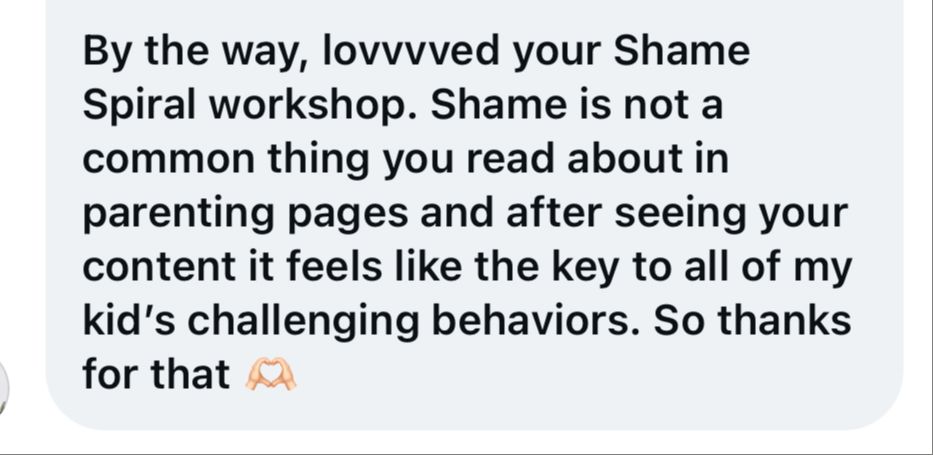
"Shame is not a common thing you read about in parenting pages, and after seeing your content it feels like the key to all of my kid's challenging behaviours."

What Is Your Child's Experience?
When going through the list above, it can be easy to look at your child's behaviour and think they are difficult. If you have had these thoughts, I want you to know you are not alone, but once you understand what's actually happening inside, it can help change how you see those behaviours.
Shame is not just a feeling. It is an intensely painful whole-body experience, and for kids like ours who are wired for big feelings, it can be overwhelming.
"I had no idea the way I was triggering my kid's shame. I thought I was doing the right thing by holding a firm boundary with hitting and didn't realize I'm shaming."

When Shame Goes Unnamed
If you are reading this, it's likely you have already tried the things. But you are noticing something — the advice to connect more, or hold firmer boundaries, doesn't seem to make a difference.
- The reactions get stronger, not smallerThe pathways they form in their brain actually get stronger with every use. Without a new pattern, the shame fuelled reactions tend to intensify, not settle, as kids get older and situations get more complex.
- They start to build an identity around it"I'm the bad kid." "I always get in trouble." "Nobody likes me." When shame goes unaddressed long enough, children begin to organise their sense of self around it. That inner story becomes harder to rewrite the longer it runs.
- Friendships become harderPeers do not have the same patience or understanding that parents do. A child who falls apart when they lose, who cannot hear feedback without exploding, or who goes cold and withdraws, can find friendships harder to build and keep.
- The shame spiral is exhausting for both your child, and youOver time, parents can find themselves dreading their own child, walking on eggshells, and losing the easy warmth that feels like it should be the baseline.
- The standard advice keeps missing itSticker charts, time-outs, consequences: these are all strategies aimed at behaviour. None of them address what shame is doing underneath. Which is why parents who are doing everything right can still feel like nothing is working. They are solving the wrong problem.
None of this is inevitable. Understanding what is actually happening is the only way to change it.
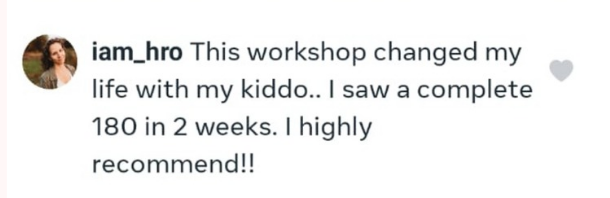
"This workshop changed my life with my kiddo. I saw a complete 180 in 2 weeks."


The Shame Spiral Workshop
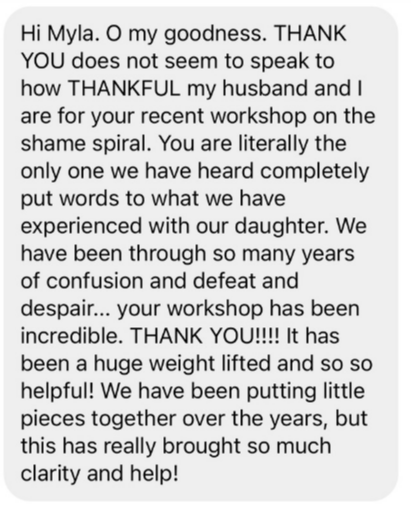
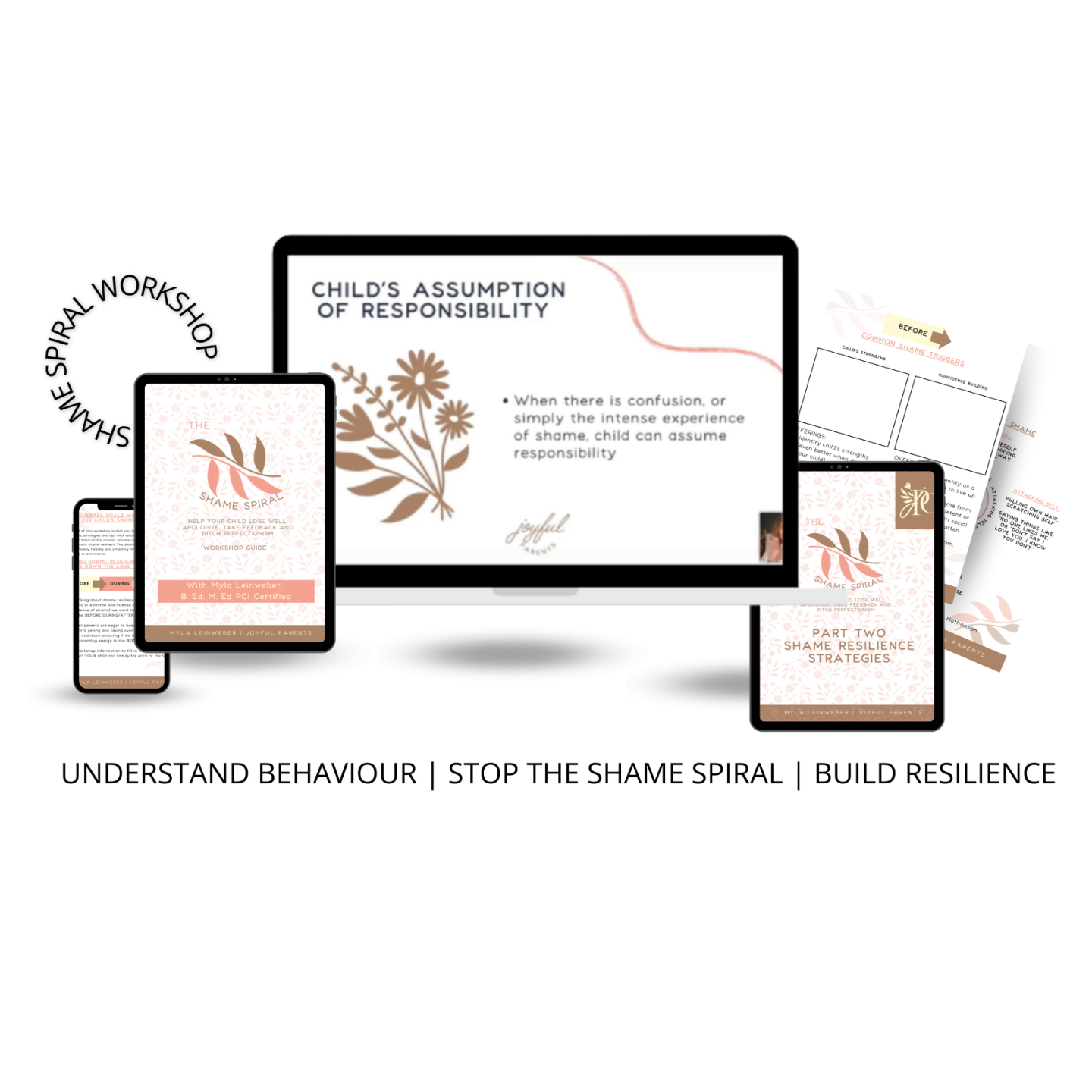
If you saw your child in the checklist above, this is where you go next. In this three-part workshop, you will understand exactly what the shame spiral looks like in your child, why the strategies that should work keep backfiring, and what to do instead in the before, during, and after to help not only stop the shame spiral in its tracks but build shame resilience. It comes with a companion guide and my signature framework of the before, during, and after.
 Get Instant Access
$27 USD | Instant access | 1,000+ parents through this workshop